
In the life sciences tech, the first 90 days after launch are critical. A strong go-to-market strategy for life sciences can determine whether early momentum turns into measurable growth or stalls completely. Unlike consumer apps or traditional SaaS, selling in this market means navigating complex systems, cautious buyers, and long decision cycles. Without structure, even the best products lose traction before they gain market confidence.
The failure rate in life sciences and health tech is staggering. One industry report found that around 60% of health tech startups fail within five years, and close to 90% eventually shut down altogether.
These outcomes rarely result from weak science or poor technology. Many startups enter the market without a structured GTM framework or a validated strategy for growth, causing their messaging to shift from one priority to the next. Marketing begins before the buyer is clearly understood, and teams chase early opportunities instead of building repeatable systems.
In a field where credibility, compliance, and precision matter, that lack of structure can slow progress long before product market fit is achieved. In this post, we outline the four GTM missteps that most often stall pipeline growth, explain why they happen, and show you how to avoid them so your next 90 days set the foundation for real, repeatable traction with a focus on sustainable marketing acceleration.

A common mistake in early-stage life sciences and health tech companies is hiring a marketer or team that jumps straight into campaigns before building a clear go-to-market strategy. The pressure to show activity can lead to quick wins on paper, like new ads, social posts, or email blasts. But without a shared understanding of the customer, message, and goals, those efforts rarely drive real traction.
When marketing teams start executing before they understand the market, they end up doing “a little bit of everything” instead of building a focused growth engine. Messages are inconsistent, audiences are broad, and results are hard to measure. Over time, this creates frustration, poor performance, and high turnover.
This misalignment is common. Research from Forresters found that 65 percent of sales and marketing professionals believe there is a lack of alignment between their leaders. That gap undermines performance and fuels churn, especially in complex B2B environments like life sciences.
Effective life sciences marketing starts with strategy. Before running campaigns, teams should take time to understand the buyer landscape, refine positioning, and map how marketing connects to sales and revenue. Building this foundation allows future campaigns to deliver measurable results and ensures that every hour spent contributes to pipeline growth.
Hiring marketers who can build both strategy and execution is often the best approach. They can balance near-term action with long-term planning, creating a go-to-market framework that grows with the company. A marketing team that starts with research, validation, and clear messaging will always outperform one that begins with tactics.
Case Study: Growing Pipeline Through Integrated Sales and Marketing
A SaaS company offering compliance solutions for life sciences had gone through several marketing leaders and underperforming teams without seeing results. Without a clear go-to-market strategy for life sciences, the company struggled to align marketing and sales or generate consistent pipeline growth.
Rebound stepped in with a fractional CMO and a flexible marketing team to rebuild from the ground up. The CMO worked directly with the CEO to create a focused GTM framework aligned with commercial goals and onboarded the right specialists to accelerate execution. Within the first few months, the team launched new messaging and positioning, redesigned the company website, activated digital channels, and produced targeted content for demand generation.
The result was immediate traction and renewed confidence in the company’s marketing direction. As the CEO shared, partnering with Rebound’s fractional marketing team “increased market impact while creating operational efficiencies.” By building the strategy first, then executing with the right people, the company transformed marketing from a point of frustration into a consistent growth driver.

A common life sciences startup marketing mistake is moving too quickly into campaigns without first defining your positioning and ICPs. Founders often want to “get something out the door” and start generating leads. But if your message is unclear or aimed at the wrong audience, no channel will perform. A strong go-to-market strategy for life sciences starts with knowing exactly who your buyers are and what matters to them.
Clear positioning is the foundation of every good B2B health tech GTM strategy. Without it, marketing feels scattered and sales teams end up chasing the wrong opportunities.
Recent research found that 54 percent of sellers and buyers disagree on the problem being solved during the B2B buying process. In specialized markets like biotech and MedTech, that kind of confusion can mean months of lost time and wasted spend.
This problem shows up often in early-stage marketing for health tech and life sciences. Founders usually start with assumptions about who their buyer is, but those theories rarely hold up.
Without clarity on life sciences buyer personas, including their objections, budgets, and value triggers, even the best campaign will miss the mark.
Before testing new channels or creating content, make sure you deeply understand who your real buyers are and what matters to them. The goal is to move from guessing to knowing.
Key questions to ask yourself:
The answers to these questions shape your entire go-to-market approach.
How to validate your ICPs and positioning

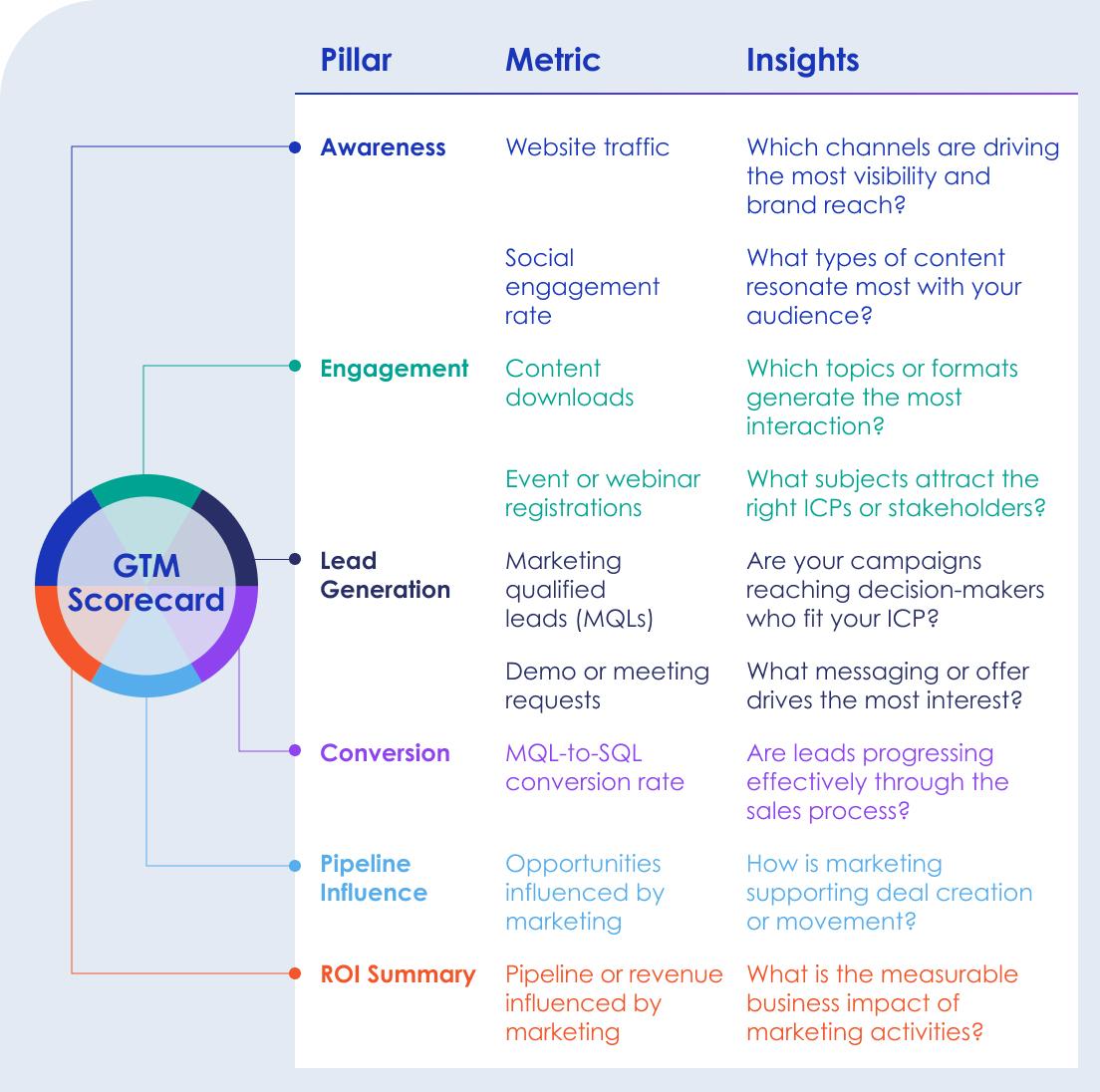
Another common mistake in early-stage life sciences marketing is doing a little bit of everything without a clear way to measure what’s working. Founders often feel pressure to “be visible,” so they try numerous tactics at once, like running LinkedIn ads, hosting webinars, and sponsoring events. The problem is that without tracking and attribution, it’s impossible to know which efforts are generating leads or moving deals forward.
When teams chase tactics without structure, marketing becomes noise instead of a growth engine. You might see clicks or impressions but not pipeline influence. This is where a clear measurement plan becomes part of your go-to-market framework.
Once your data connects to outcomes, you can decide what to scale and what to stop. That’s how startups move from guessing to growing.
If you’re unsure where to start, Rebound can help you build a GTM scorecard to track marketing performance and pipeline influence. Having visibility into what’s driving results gives your team the confidence to double down on what works and stop spending on what doesn’t.
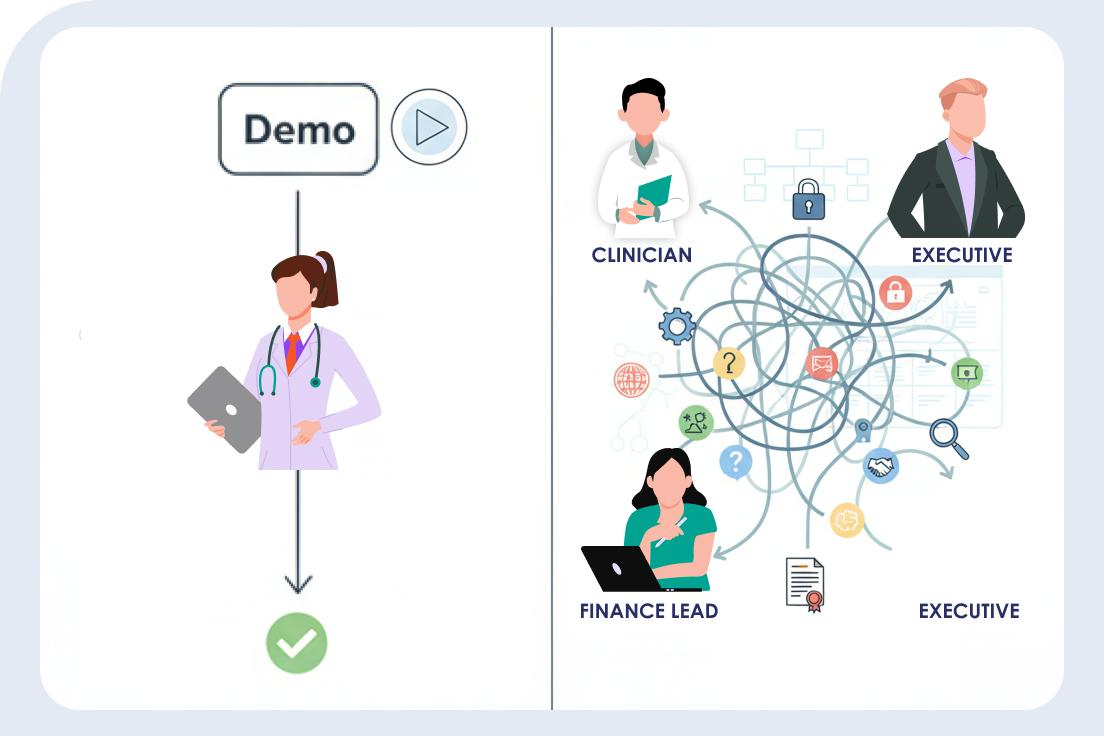
In software and B2B SaaS marketing, fast demo requests and short sales cycles are often the goal. However, in life sciences and health tech, buyers operate in regulated environments and make decisions based on evidence, compliance, and patient outcomes. A go-to-market strategy for life sciences must reflect this complexity, or the messaging will feel disconnected and fail to build trust with its audience.
Life science buyers often decide as committees, not individuals. Your messaging needs to connect across clinical, procurement, and financial roles, each with its own priorities and concerns. Regulatory and reimbursement factors add even more layers. For example, a B2B health tech GTM strategy must communicate both clinical validation and financial impact, not just product features or technology performance.
Startups that adapt their positioning to match buyer realities see stronger engagement and faster adoption.
Case Study: Launching a New Regulatory Content Management Application
A global life sciences software company was preparing to launch a new regulatory content management tool but struggled to connect its product story to the right audience. Their team had deep technical knowledge but needed help turning that into messaging that made sense to regulatory and clinical buyers.
Rebound provided a product marketer with life sciences experience to lead the launch. Working with product and sales leaders, the marketer created messaging that focused on buyer priorities such as compliance, efficiency, and how the tool fit into existing workflows. The team also developed sales materials, customer content, and a new web page that reflected how real decision-makers evaluate new solutions.
The result was a stronger launch, better engagement, and faster adoption because the message spoke directly to the people who mattered most.
You don’t have to spend months or years learning these lessons the hard way. The right GTM strategy for life sciences starts with focus, not guesswork.
Rebound’s 90-Day Startup Sprint helps founders avoid early stalls by validating ICPs, defining positioning, and building a GTM framework that drives real traction. If you want to benchmark your current approach or map your first 90 days with clarity, book a consult with our team. A focused plan today can save months of wasted effort and set the foundation for sustainable growth.


To make sure you get accurate and helpful information, this guide has been edited and fact-checked by the Rebound Editorial Team.