

Many life sciences, healthtech, and SaaS startups generate their earliest revenue through one source: the founder’s network. In the beginning, this approach works. Warm introductions lead to the first customers, pilots, and partnerships. But as the company grows, the limits of founder-led marketing become impossible to ignore. Pipelines become inconsistent, sales cycles slow, and growth goals start outpacing internal capacity.
At this stage, leadership faces a critical decision: whether to hire in-house, outsource to an agency, or bring in a fractional CMO for startups who can deliver senior-level marketing leadership without the cost or commitment of a full-time executive. The demand for this model has surged; fractional executive roles have increased by 57% since 2020, reflecting a broader shift toward flexible, high-impact marketing leadership that can scale with early-stage companies.
A fractional CMO brings the structure, GTM clarity, and cross-functional alignment startups need to evolve beyond founder-led growth. And when paired with a modular marketing team, even lean organizations can unlock the execution power required to drive pipeline, strengthen brand positioning, and accelerate go-to-market performance.
This guide breaks down when to hire a fractional CMO, how modular teams support execution, and why this combined model helps emerging startups achieve faster, more predictable growth.
Startups in life sciences, healthtech, and B2B SaaS often build their marketing reactively. Founders write messaging, generalists run campaigns, and GTM strategy is shaped around the urgency of the next milestone. This approach works in the earliest stages, but it cannot support scalable growth.
A fractional CMO for startups provides the senior-level GTM leadership, structure, and decision-making required to move beyond founder-led marketing. When paired with a modular marketing team, startups gain the strategic oversight and execution capacity needed to accelerate pipeline development, strengthen positioning, and build repeatable growth systems.
A fractional CMO is a part-time or project-based marketing executive who provides the strategic leadership of a full-time CMO at a fraction of the cost. Startups use fractional CMOs to align GTM strategy, shape positioning, scale marketing systems, and unify marketing + sales around revenue goals.
Learn how fractional leadership works in practice

A modular marketing team complements fractional CMO leadership by assembling specialists – content strategy, paid media, growth marketing, and marketing operations – into a flexible, scalable execution layer.
Instead of hiring multiple full-time roles or locking into a rigid agency retainer, startups can “plug in” only the capabilities they need at each stage.
This structure ensures marketing scales with the company, not ahead of it.
The combined model creates a marketing acceleration framework, where strategy and execution operate in lockstep. The fractional CMO sets direction; the modular team executes with speed and precision.
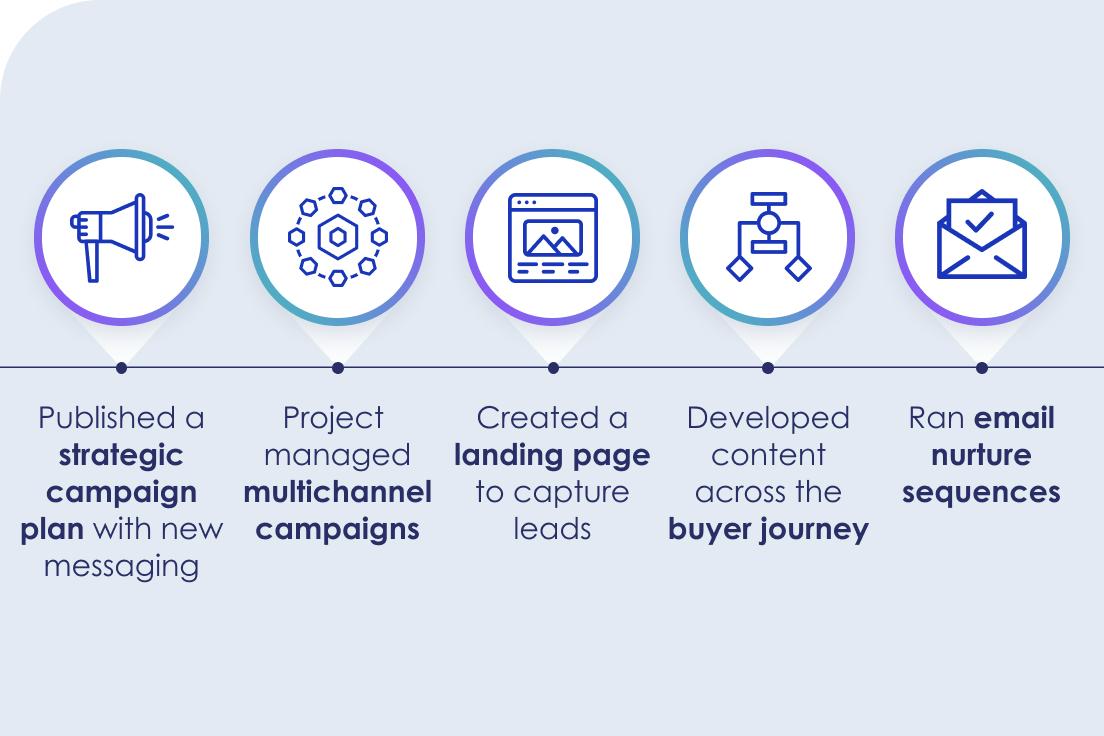
A venture-backed RWD/RWE software startup needed marketing infrastructure to meet investor expectations and accelerate commercial expansion. Rebound deployed a fractional CMO and modular pod of B2B marketers to:
Outcome: Within 90 days, the startup improved lead quality, increased pipeline transparency, and accelerated handoffs between marketing and sales, positioning the company for its next funding milestone.

Before most startups hire a fractional CMO, they begin to see a pattern – pipeline slows, execution becomes inconsistent, and founder-led marketing no longer supports scalable revenue growth. These signals appear across early-stage SaaS companies, healthtech innovators, biotech platforms, and any startup operating in a complex GTM environment.
Startups should hire a fractional CMO when marketing complexity outpaces internal capacity, GTM execution slows, or strategic leadership is needed before a full-time role is financially feasible. This typically occurs during pre-launch, seed, Series A, and early growth stages – especially in sectors with long sales cycles or technical buyers.
Many startups reach a phase where initial traction plateaus. What won the first customers rarely produces consistent revenue at scale.
A fractional CMO helps early-stage companies:
This is especially crucial for startups preparing for regulatory milestones, clinical workflows, enterprise pilots, or investor-driven targets.
Speed is often the deciding factor. The average time to hire a full-time CMO is 3–4 months, which is far too long for startups facing near-term investor expectations or competitive pressure.
A fractional CMO steps in within weeks to:
For fast-moving SaaS and healthtech companies, this speed can be the difference between gaining early traction or missing key market windows.
A full-time CMO requires a significant financial commitment (often $250K–$350K+ fully loaded).
A fractional model delivers:
This makes the model particularly valuable for startups balancing growth with fiscal discipline.
Industries with long sales cycles or technical buyer journeys require specialized marketing leadership:
Fractional CMOs with sector expertise reduce wasted spend, shorten GTM cycles, and help startups reach commercial readiness faster.
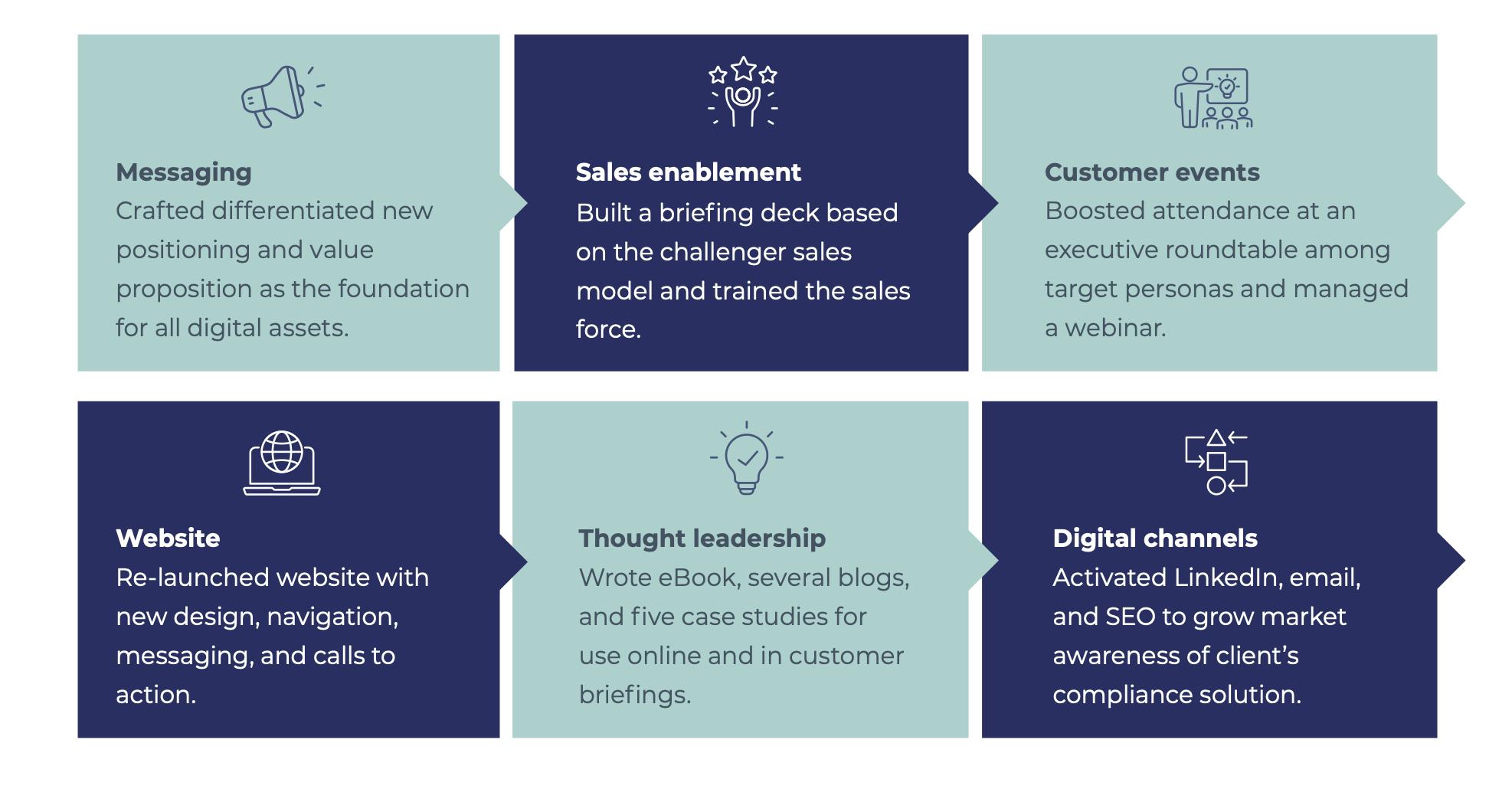
A growth-stage life sciences software company faced unstable marketing execution after multiple leadership transitions. Rebound installed a fractional CMO who:
Outcome: Within the first quarter, pipeline stability improved, messaging was modernized, and GTM execution momentum returned across revenue teams.

Startups often reach a point where their marketing efforts generate activity, but not scalable growth. A fractional CMO closes this gap by building the systems, structure, and cross-functional alignment needed to move from fragmented execution to predictable pipeline performance. For SaaS, biotech, and healthtech companies, this leadership accelerates GTM readiness and shortens revenue timelines.
Fractional CMOs accelerate GTM by aligning marketing and sales around a unified plan, building scalable marketing systems, reducing time-to-value, and bringing sector expertise to complex buyer environments. This leads to faster execution, higher-quality pipeline, and more predictable revenue.
A core benefit of a fractional CMO is the ability to unify revenue teams. In most early-stage companies, marketing and sales operate in parallel, but not in sync. Messaging varies across channels, handoffs are inconsistent, and revenue responsibility is unclear.
Impact: Startups typically see tighter funnel alignment, improved lead quality, and shorter sales cycles once GTM coordination is established.
Many early-stage companies rely on ad hoc tools and one-off campaigns. Fractional CMOs transform these into scalable marketing systems.
These systems connect daily execution to measurable pipeline outcomes.
Hypothetical benchmark: Startups often see a 20–40% improvement in funnel efficiency within the first 3–6 months of installing foundational systems.
Fractional CMOs elevate pipeline quality by focusing on the channels and motions most likely to convert.
Impact: Startups typically eliminate 15–30% of wasted spend while reallocating budget toward higher-performing GTM motions.
Hiring a full-time CMO can take 3–4 months, followed by onboarding, GTM discovery, and internal alignment. Early-stage companies don’t have that luxury.
A fractional CMO steps in quickly, often within days, to provide senior-level leadership at the exact moment it’s needed.
This agility is especially valuable for startups preparing for fundraising, regulatory milestones, or commercial launches.
Biotech, medtech, and B2B SaaS environments require specialized expertise that generalist marketers or traditional agencies may lack.
Fractional CMOs reduce ramp time by applying proven GTM frameworks from similar companies, accelerating growth without steep learning curves.
Startups operating in complex sectors like life sciences, healthtech, and B2B SaaS, need more than execution support. They need a marketing engine that adapts to shifting priorities, accelerates GTM readiness, and builds the systems required for predictable, scalable growth. Rebound’s model delivers exactly that through a fractional CMO + modular GTM engine designed specifically for early- and growth-stage companies.
This combined structure gives startups both the strategic leadership and execution power required to move from fragmented marketing activity to revenue-aligned GTM performance.
Rebound’s modular GTM engine pairs fractional CMO leadership with flexible execution pods across strategy, content, growth marketing, and marketing operations. This model embeds directly into client teams, accelerates GTM execution, and provides a more effective alternative to traditional agencies.
Unlike traditional agencies who focus on deliverables, Rebound embeds into your organization to own GTM outcomes. A fractional CMO provides senior leadership, while modular specialists execute quickly and align everything to measurable pipeline impact.
A fractional CMO plus a modular execution team delivers faster GTM speed, stronger alignment, and more predictable revenue than traditional agencies.
Rebound’s fractional CMOs act as part of your executive team, aligning strategy across marketing, sales, product, and revenue.
This leadership layer ensures the modular team executes within a clear, unified strategic roadmap.
➡️ Strategic leadership frameworks
Rebound’s modular GTM engine pairs your fractional CMO with a cross-functional marketing team tailored to your growth stage. This gives startups an on-demand mix of specialists without committing to multiple full-time hires.
Because pods scale up or down as needed, startups get exactly the expertise required – no bloated retainers, no misaligned deliverables.
Rebound’s pods function as an embedded plug-in GTM engine. They integrate seamlessly with your internal teams and accelerate execution across the full commercial stack.
Outcome: Startups gain the leadership and operational capacity needed to grow without overhiring or relying on disconnected agencies.
Rebound’s modular GTM engine outperforms traditional agency models by pairing:
For life sciences, SaaS, and data-driven startups, this model provides the flexibility, speed, and cross-functional expertise needed to achieve commercial readiness and accelerate revenue.
Scaling a startup requires more than a strong product or a handful of early wins. Sustainable growth comes from having the right GTM leadership, the right marketing systems, and the right execution model – all working together to generate predictable pipeline and accelerate revenue.
A fractional CMO for startups gives you senior-level marketing leadership exactly when you need it. A modular marketing team ensures you have the execution power to bring that strategy to life. Together, they form a high-impact GTM engine built for the pace and complexity of modern SaaS, biotech, and healthtech markets.
If your company is entering its next phase of growth, and you need structure, clarity, and measurable GTM performance, now is the perfect time to explore how this model can work for you.

A fractional CMO provides part-time executive marketing leadership, aligning GTM strategy, building scalable systems, leading demand generation, and ensuring marketing and sales work toward shared revenue goals.
Most startups pay 30–50% of a full-time CMO salary for fractional support. This model frees budget for execution – content, paid media, marketing ops, and tooling – while retaining senior-level leadership.
Modular teams give startups on-demand access to specialists across content, growth marketing, paid media, analytics, and marketing operations. You plug in only the skills you need, for as long as you need them.
Fractional CMOs are ideal for complex industries with long sales cycles, technical buyers, or regulatory considerations, such as life sciences, biotech, healthtech, medtech, and B2B SaaS.
Agencies focus on deliverables; fractional CMOs focus on outcomes. With Rebound, the fractional CMO leads your GTM strategy while a modular team executes it, providing a unified, accountable engine for pipeline and revenue growth.

To make sure you get accurate and helpful information, this guide has been edited and fact-checked by the Rebound Editorial Team.