
Launching a new product in today’s market is hard. In the life sciences tech industry, it is even harder, as it is faced with many unique challenges.
Many teams run into the same issues. Product teams focus on features without fully validating customer needs. There is also immense pressure to move quickly, causing teams to skip core product marketing work like defining messaging, aligning with sales, or setting clear success metrics. These common shortcuts and mistakes create confusion in the market and slow down pipeline growth.
The result is a launch that generates initial interest but fails to build momentum. Where do most teams go wrong?
Most life sciences SaaS product launches fail because of how the product is brought to market, not because of the quality of the product itself. In fact, 43% of startups fail because the product simply didn’t fit into the market.
One common issue is building before validating the market. Product teams focus on features and functionality without fully understanding how well the solution fits real customer needs. Market insight comes too late, and messaging has to catch up after the fact.
Teams often describe what the product does, but not why it matters. In regulated healthcare markets, buyers need to understand the impact on workflows, data, and outcomes. Without that clarity, even strong products struggle to gain traction.
There is also a structural problem. Many teams treat launches as a single event tied to a release date. In reality, effective launches build over time through a steady flow of campaigns, customer validation, and market signals.
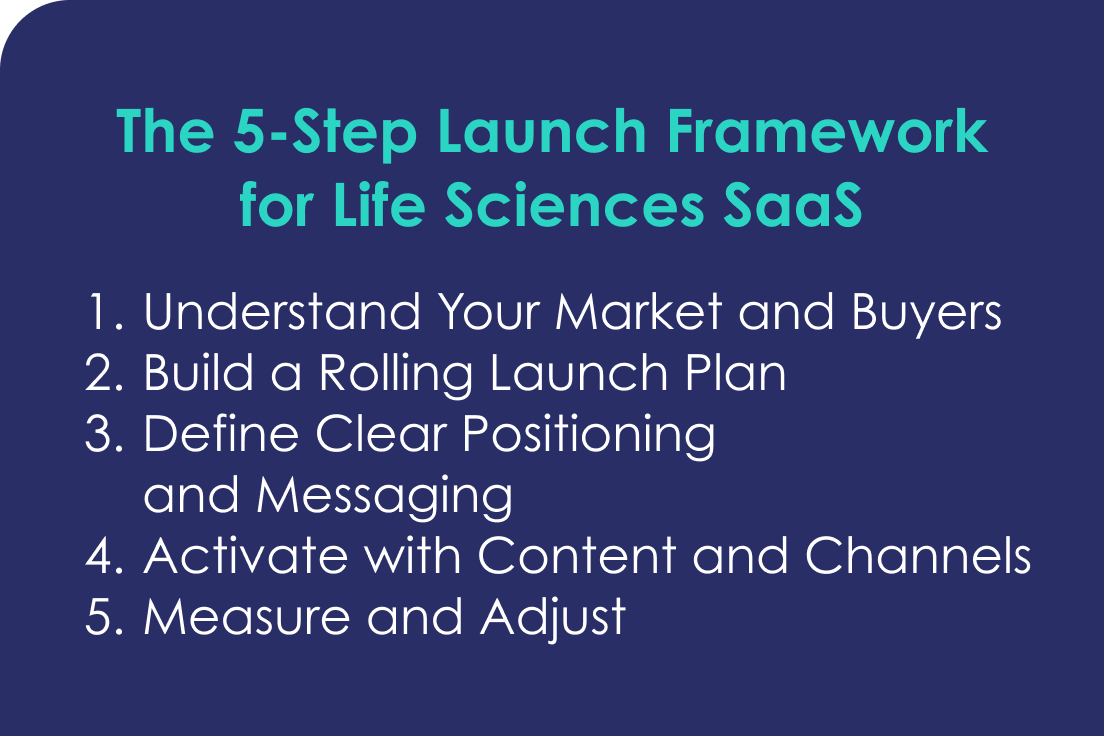
A strong life sciences SaaS product launch is built on structure. Teams that gain traction follow a clear process that connects market insight, messaging, and execution. Here’s how:
Start with a deep understanding of your target market. This includes how customers solve the problem today, where current solutions fall short, and how buyers evaluate new options.
Early customer engagement matters. Working with a small group of key accounts before launch helps validate product fit, uncover gaps, and build early advocates.
A strong SaaS launch uses a phased approach with ongoing campaigns, customer announcements, and proof points. This “rolling” strategy builds visibility and credibility over time.
Your messaging framework should explain what the product does, who it is for, and why it matters.
This becomes the foundation for all marketing and sales efforts. It should highlight differentiated value and connect directly to customer problems, not just product features.
Execution requires consistent visibility across channels.
This includes email, social, events, webinars, and website content. The goal is to meet buyers where they are and reinforce your message through multiple touchpoints.
Define success early and track performance throughout the launch.
Key metrics include marketing qualified leads, product adoption, and early customer traction. These signals help teams refine messaging, improve targeting, and adjust execution in real time.
In life sciences tech and health tech markets, messaging carries more weight. Buyers are not just evaluating features, but risk and long-term value. That is why positioning needs to be clear and grounded in real outcomes.
Start by translating technical capabilities into business impact. Product teams often describe what the software does, but it needs to explain how it improves workflows, integrates with existing systems, or accelerates insights. Without that connection, buyers struggle to see relevance.
Messaging also needs to reflect the different stakeholders involved. A technical buyer may care about data integration and architecture, while a commercial leader may focus on efficiency and ROI. One message does not work for all of them.
All of this should be anchored in a defined messaging framework from a content marketing team. This framework answers a few core questions:
Building a clear messaging framework takes time, alignment, and market insight. For SaaS providers to life sciences and healthcare, this often requires a structured approach that connects product, marketing, and sales.
When this foundation is clear, every asset and campaign becomes more consistent and effective.
Early success should be measured beyond initial interest. If customers are not actively using the product, long-term growth is at risk. In SaaS, retention drives revenue, and low usage often leads to churn.
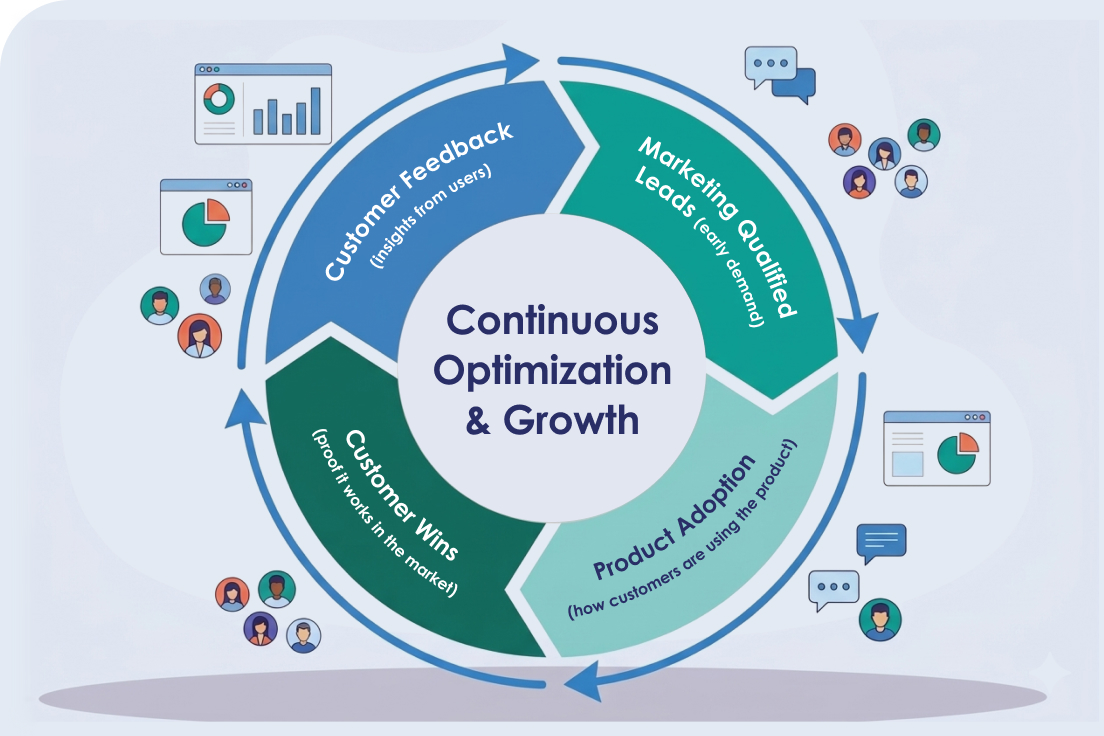
That is why post-launch tracking needs to focus on a few key signals. Marketing qualified leads show early demand. Product adoption shows real engagement. Early customer wins validate positioning in the market. Together, these indicators provide a clear view of whether the launch is working.
Customer feedback is also critical at this stage. Advisory boards, user groups, and direct conversations help teams understand how the product performs in real environments. This feedback loop informs both product development and go-to-market adjustments.
Sustained growth comes from continuous optimization. The most effective teams treat launch as an ongoing process tied to pipeline growth and customer retention. This is where many SaaS providers to life sciences and healthcare need support. Maintaining momentum requires more than a launch plan. It requires ongoing alignment across strategy, execution, and measurement.
Rebound works with SaaS, data, and professional services companies serving life sciences and health tech to extend beyond launch. From refining positioning to scaling demand generation and supporting marketing operations, the focus is on building a repeatable go-to-market engine that drives pipeline and long-term growth.
A successful launch gets you into the market, but sustained execution is what keeps you there. At Rebound, our experts can help you navigate each step of the SaaS launch cycle to ensure that your solution is presented as clearly and cleanly as possible. Talk to us today to learn more.
Q1: Why do B2B SaaS product launches fail in life sciences and healthcare markets?
A: Most failures come from weak market validation, unclear messaging, and poor alignment between product, marketing, and sales. Many teams also treat launch as a one-time event instead of an ongoing process.
Q2: What is a rolling launch strategy in B2B SaaS?
A: A rolling launch strategy is a phased go-to-market approach that builds momentum over time through campaigns, customer wins, and ongoing content instead of a single launch date.
Q3: How do you measure success after a SaaS product launch?
A: Success is measured using a mix of KPIs such as marketing qualified leads, product adoption, early customer traction, and retention rates.
Q4: What role does messaging play in B2B marketing for companies selling into life sciences and healthcare?
A: Messaging connects technical capabilities to business outcomes. It helps different stakeholders understand the value of the product and builds credibility in complex, regulated markets.
Q5: When should a company bring in external GTM support for a product launch?
A: External support is useful when internal teams lack bandwidth, alignment, or experience in regulated healthcare markets. A structured partner can help define positioning, execute campaigns, and build a repeatable go-to-market strategy.
To make sure you get accurate and helpful information, this guide has been edited and fact-checked by the Rebound Editorial Team.