Most life sciences companies already invest heavily in events, but the pressure to prove ROI is getting harder to ignore. According to CEIR research, 33% of annual new business for B2B companies now comes from trade shows and events, while 72% of attendees say they are more likely to buy from exhibitors they meet in person.
The real question is whether those events are generating pipeline or simply consuming budget.
Too often, conferences, webinars, and hosted events operate as standalone tactics disconnected from broader demand generation efforts. Booth traffic gets counted and meetings are scheduled, but then momentum fades once the event ends.
The companies seeing stronger results are taking a different approach. They treat events as part of a larger multichannel campaign strategy that connects audience targeting, digital outreach, lead capture, and post-event nurture into a single go-to-market motion.
A successful multichannel campaign does not need to be massive to be effective. In fact, most life sciences companies benefit from starting small with a focused audience segment, a defined campaign window, and measurable goals.
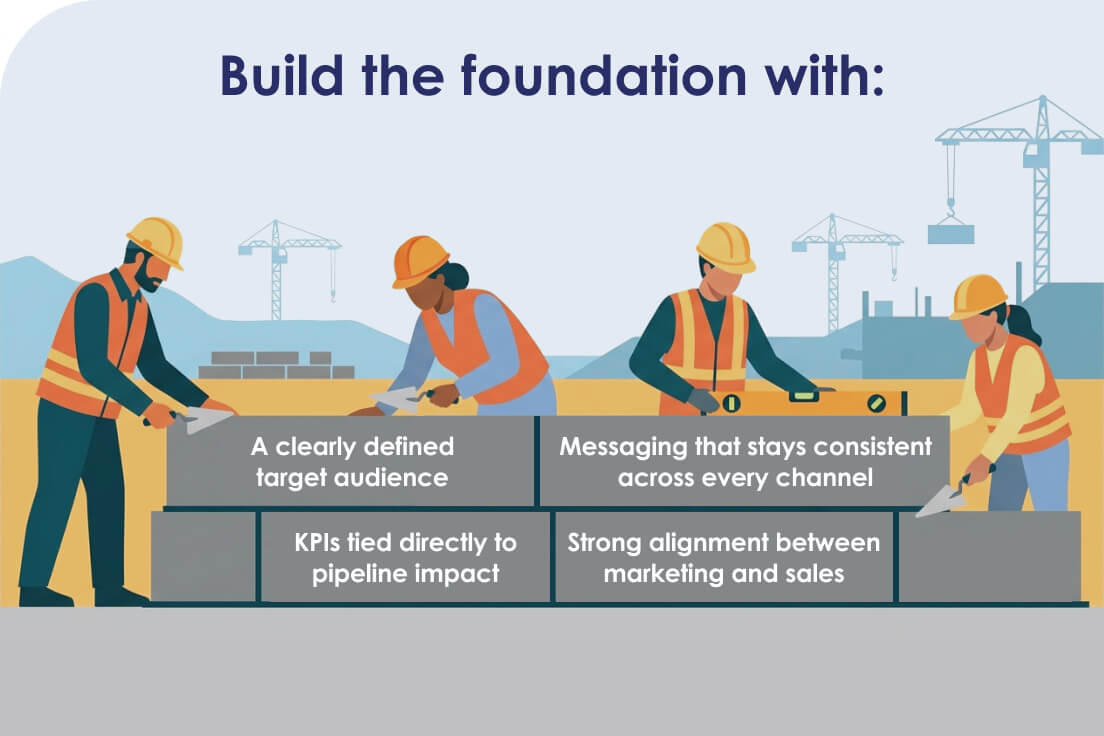
That framework starts with a few basics:
For life sciences tech event marketing teams, this usually means building campaigns around a specific solution area or buyer persona instead of trying to reach everyone at once. A two- or three-month campaign tied to one event often creates more measurable impact than broad, disconnected activity.
The supporting channels matter just as much as the event itself. Email nurture, social promotion, SEO content, outbound outreach, and CRM workflows all help reinforce messaging before and after the conference.
The strongest event programs begin long before attendees walk onto the show floor.
Before committing budget and resources, teams should define who they want to engage and what success should look like. That includes identifying target attendees with sales input and aligning metrics such as meetings booked, qualified leads generated, or pipeline influence.
Promotion is another common gap. Many companies invest heavily in event presence but spend little time driving awareness beforehand.
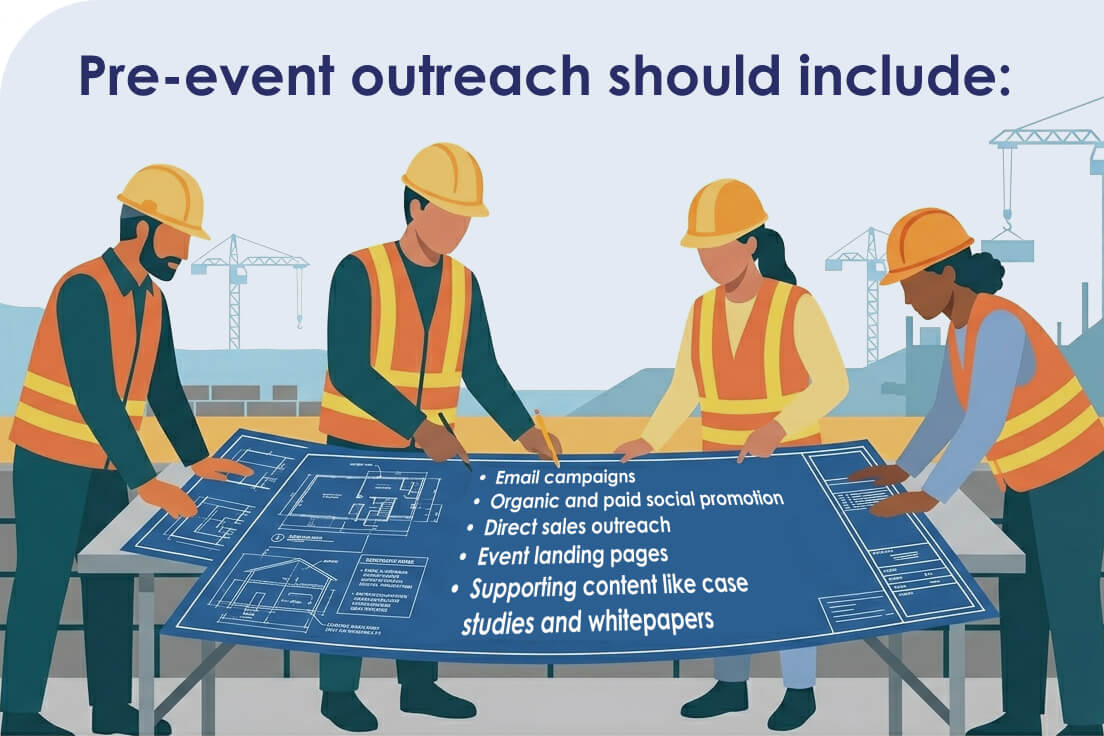
Pre-event outreach should include:
Sharing relevant content before the event gives prospects context and creates a stronger reason to engage onsite.
This is where multichannel GTM campaigns become especially valuable. Prospects rarely convert after a single touchpoint. Repeated exposure across channels helps build familiarity before conversations happen in person.
Even well-attended events underperform when lead capture and follow-up processes break down.
Technology can simplify this significantly: QR codes, RFID badges, event apps, and CRM integrations all make it easier to capture attendee information consistently and route leads quickly to sales teams.
The bigger issue is usually timing.
Companies often wait too long to follow up after events, missing the window when conversations are still fresh. A clear post-event process should already be in place before the conference begins, ideally with outreach happening within 24-48 hours.
The best teams also extend event engagement into ongoing nurture campaigns. Session recordings, recap emails, follow-up content, and personalized outreach help continue the conversation after the event ends instead of treating it as a one-time interaction.
Event success should not be measured by badge scans alone.
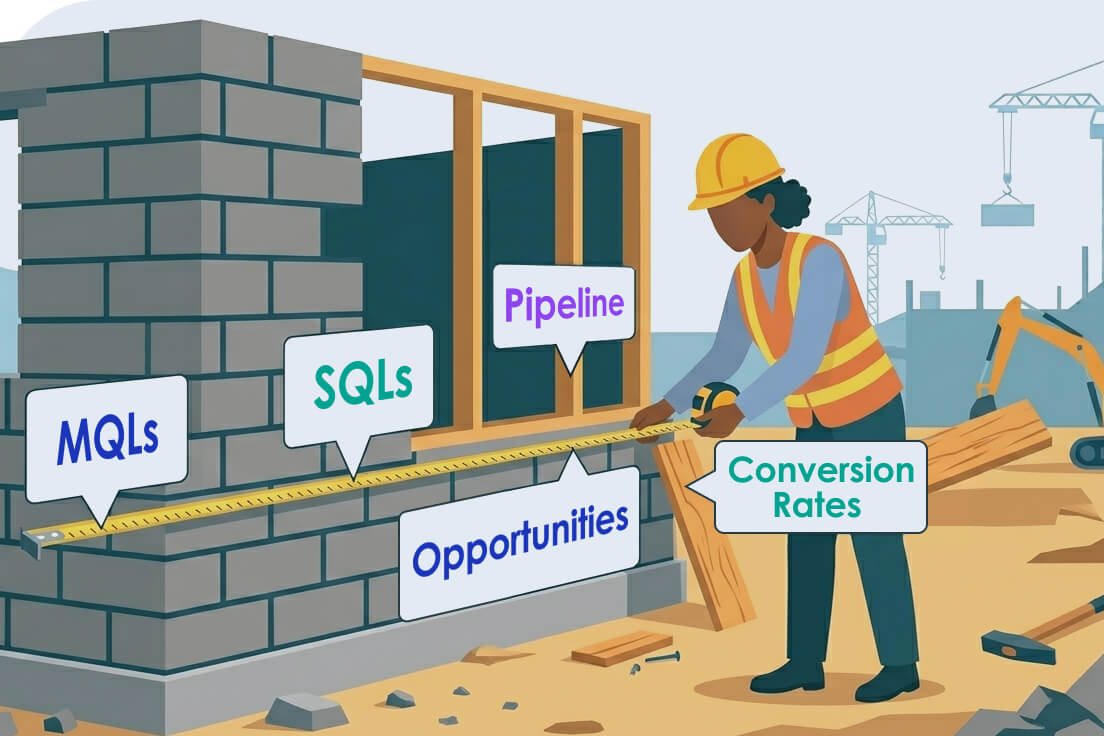
A stronger lead generation strategy ties event performance to broader pipeline metrics, including:
It is equally important to evaluate how channels performed together. If event attendance increased but follow-up engagement remained low, the issue may be messaging consistency, nurture timing, or sales coordination rather than the event itself.
Reviewing campaign performance across channels helps marketing teams improve future execution and make better budget decisions over time.
Events still play an important role in life sciences marketing. They create opportunities for direct conversations, product education, and relationship building that digital channels cannot replicate.
But events perform best when they operate inside a larger demand generation framework.
For smaller companies, that often means building flexible campaigns that combine digital outreach with targeted event activity. For enterprise organizations, it usually means coordinating messaging, nurture, and reporting across longer and more complex buying cycles.
In both cases, the goal is the same: treat events as one part of a connected GTM engine instead of isolated marketing moments.
If your team is evaluating how to improve multichannel campaign execution and event-driven pipeline growth, Rebound can help you build a marketing strategy that connects events, demand generation, and measurable business outcomes.
Connect with us today to get started.
Q1: How do multichannel B2B campaigns improve event ROI?
Multichannel campaigns reinforce event messaging across email, social media, sales outreach, and content marketing, helping prospects engage before and after the event.
Q2: What metrics should companies track after industry events?
Teams should track MQLs, SQLs, meetings booked, opportunity creation, pipeline influence, and follow-up conversion rates.
Q3: How quickly should sales teams follow up after an event?
Most companies should follow up within 24–48 hours while conversations and brand awareness are still fresh.
Q4: How do you connect event marketing to a broader GTM strategy?
Event marketing should align with audience targeting, campaign messaging, nurture programs, CRM workflows, and sales follow-up as part of an integrated demand generation strategy.
To make sure you get accurate and helpful information, this guide has been edited and fact-checked by the Rebound Editorial Team.