
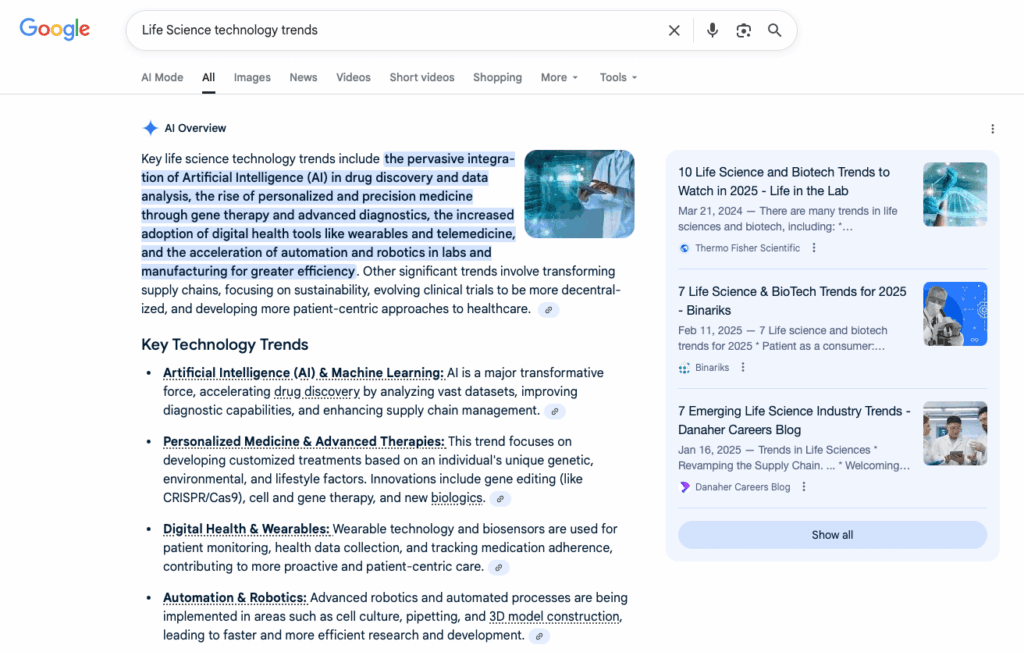
As AI transforms how people discover and consume content, businesses must rethink how they structure their digital presence. Traditional keyword stuffing and backlink chasing are no longer enough. Today, success in search comes from designing content that serves both humans and AI.
In 2026, Life Science AI Search means more than simply having keyword-rich content. It refers to how life sciences, biotech, and medtech organizations must design their digital presence so that AI tools understand, extract, and surface their content in search replies, summaries, knowledge panels, and literature-search tools.
When done right, content optimized for AI becomes part of the foundational knowledge that AI uses when answering questions about drug discovery workflows, genomics, diagnostics, regulatory compliance, and patient safety.
But AI is changing the way that life science companies connect with their intended audiences, especially on search engines.
Gartner projects that by 2026, search activity on traditional engines will decline by 25%, as AI chatbots and virtual assistants take over a growing share of search behavior and marketing influence. Currently, nearly one in five of the top 20 Google search results contain AI-generated content.
These figures make it clear: Life Science AI Search is not just a buzzword. It is becoming essential for credibility, visibility, and competitive advantage in this industry.
Below, we explore three pillars of AI-first optimization: SXO, AEO, and GEO. Each one plays a distinct role in making your content visible and useful in an AI-driven search landscape.
SXO, or Search Experience Optimization, is the next step beyond SEO. SXO combines SEO and user experience (UX). The goal is to make your content easy to find and engaging once a visitor lands on your page.
AI search systems now prioritize content that offers a seamless journey from discovery to conversion. This means that simply ranking high isn’t enough; the user experience upon arrival is equally crucial. A slow, confusing, or irrelevant page can signal to AI systems that the content lacks value, potentially diminishing its visibility. Conversely, clear, fast-loading, and well-structured content that guides users naturally toward the next step is more likely to be recognized and promoted by AI search engines.
To effectively implement SXO in 2026, focus on:
By aligning SEO with UX principles, you create a cohesive experience that not only attracts visitors but also retains them, ultimately driving conversions and improving your site’s performance in AI-driven search results.
AEO formats content so AI tools and next-generation search engines can surface direct answers without users clicking through multiple pages. Platforms like Google AI Overviews and ChatGPT rely on this structure to provide quick, accurate responses.
In practice, AEO treats each page as a potential “knowledge snippet” that AI can extract and reuse. In 2024, nearly 60% of Google searches ended in zero clicks, showing how often users get answers without visiting a site. AI Overviews already appear in 16% of desktop searches, highlighting the growing importance of designing content for AI.
Optimizing for AEO requires clear structure, semantic precision, and trust signals to ensure AI treats your page as a reliable source, making it as crucial as traditional SEO in the era of Life Science AI Search.
1. Use headers as questions
Frame H1s and H2s as the very questions your audience might ask. For instance, “How can fragmented clinical data be unified for regulatory reporting?” is more effective than a generic title. Questions align with how users converse with AI tools and help AI systems identify context quickly.
2. Answer immediately after the header
Right below a question header, offer a clear, one- or two-sentence answer that stands alone. This gives AI the “chunk” it needs to pull into summary boxes or overviews without requiring additional context. For a biotech audience, that might look like: “Use a centralized, compliance-aware data platform to harmonize disparate clinical, safety, and regulatory information into ready-to-use datasets.”
3. Write snippet-ready content
Keep paragraphs short (one to three sentences) and avoid embedding multiple ideas at once. In AEO, clarity is more important than exhaustive detail. AI systems favor content they can extract cleanly. Also, structure supporting paragraphs in a way that elaborates on the core answer but stays tightly focused on the question that preceded it.
4. Support with credible internal and external citations
AI systems, especially in regulated domains like life sciences, prefer content grounded in rigor. Link to internal white papers, technical briefs, or clinical study results. Also cite authoritative external sources such as PubMed, regulatory body sites (e.g. FDA, EMA), or peer-reviewed journals. These references enhance your E-E-A-T (experience, expertise, authoritativeness, trustworthiness) and increase the chance your content is seen as citation-worthy.
AEO does not replace SEO but extends it, making your content eligible for AI-generated answers without users visiting your site. Traditional SEO still drives discoverability, while AEO helps life science brands gain citations in AI responses. In evidence-driven sectors like biotech, clinical research, and safety reporting, this can increase trust, indirect traffic, and overall brand visibility.
GEO ensures your content can be discovered and used by AI platforms like Gemini, ChatGPT, Claude, and Perplexity when generating responses. Unlike traditional SEO, which focuses on ranking, GEO focuses on how AI selects, synthesizes, and presents your content.
Many users now receive information directly through AI-generated summaries rather than clicking through to websites. By 2024, over 60% of online searches were addressed through generative AI platforms such as ChatGPT, Perplexity, and Google’s SGE.
Research from Cornell University shows that structured, scannable, and domain-aware content increases the likelihood of being cited in AI responses. The study also found that generative AI favors authoritative third-party sources, highlighting the importance of shared credibility and clear formatting.
To succeed with GEO, life science content must be structured and trustworthy so AI models can parse, interpret, and present it accurately.
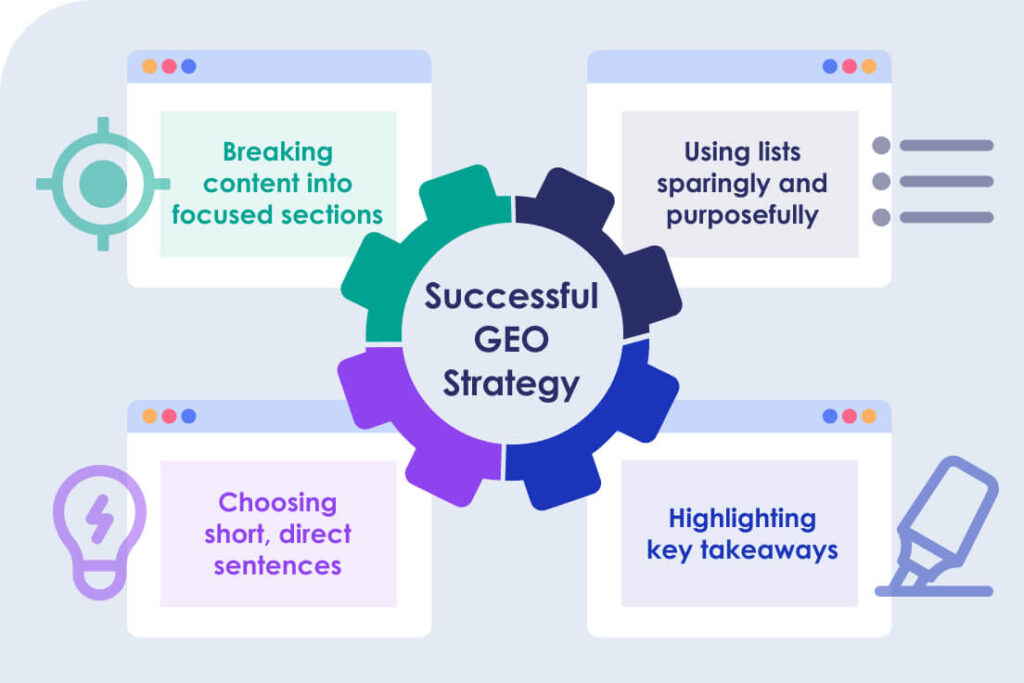
To align with GEO, your content must be machine-friendly and semantically clean. Here are refined tactics that reflect both best practice and the dynamics of AI systems:
Each section should explore a single core idea. This avoids forcing AI into interpreting multiple concepts at once. When content is segmented into clean, individual units, each chunk becomes a candidate for AI to select or synthesize independently.
Bullet points or numbered lists are helpful when they highlight steps, comparisons, or short takeaways. AI often recognizes these as structured data and can lift them into summaries more reliably than blocks of prose. The goal is not to saturate your page with lists, but to use them where they add clarity and scannability.
Avoid complex, nested sentences. Use language that cuts straight to the point. AI models prefer clarity and brevity because they reduce the burden of inference during synthesis.
At the end of each section, include two or three summary statements or “takeaways.” These act as beacons for AI systems; the clearer they are, the more likely the system will reuse them. You might phrase them as “In summary: …” or “Key point: …” to signal a semantic boundary.
In regulated sectors like biotech, diagnostics, or clinical research, accuracy, authority, and traceability matter a great deal. If an AI system is going to present a statement in response to users’ questions, it must trust the source. Properly structured content with evidence, clear logic, and clean segmentation improves that trust.
Blogs, briefs, and articles continue to play an important role in visibility, but their structure now needs to align with the way AI-driven search interprets and delivers results. Search systems do not simply scan for keywords anymore. They evaluate how well content is organized, whether it answers specific questions, and how useful it is once a reader engages with it.
For organizations in life sciences, this shift is particularly important. Explaining complex topics is one of the biggest challenges in Life Science Tech digital marketing because the subject matter is often technical and directed toward highly specialized audiences.
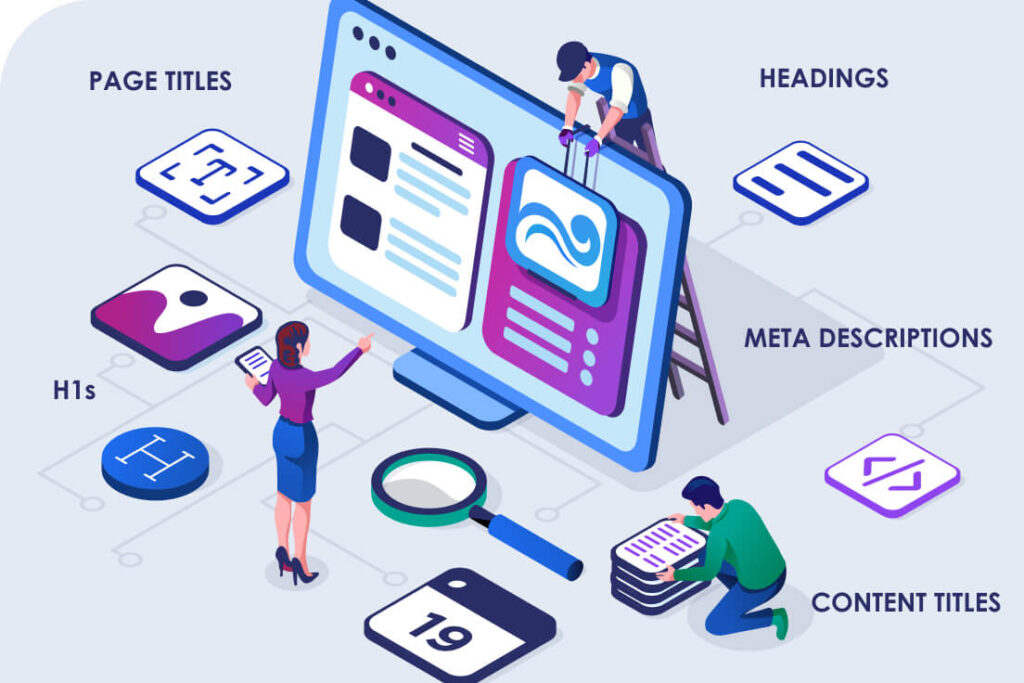
Page titles should stay under 60 characters to ensure they appear clearly in search results and are easy for AI systems to interpret. Short, precise titles help AI-driven search match content to user queries more effectively.
Meta descriptions also play a role in Life Science AI Search. Limiting them to around 120 characters ensures that they are not cut off, while concentrating on user intent helps position the page as a direct answer to a searcher’s need. A strong description can guide search engines and AI systems to position your content as the best answer for a specific query.
Titles and H1s should be clear, direct, and kept under 70 characters. Integrating subtitles into the first H1 can create greater impact, since AI search increasingly evaluates how titles capture both the main theme and supporting context. This approach ensures content stands out in a crowded field and makes it easier for readers in life sciences to identify the value quickly.
Content titles and H1s should remain concise and under 70 characters, with subtitles woven into the first H1 whenever possible to strengthen both clarity and keyword impact. On-page headings, from H1 through H4, benefit from being direct, relevant, and easy to scan. AI search systems tend to reward question-based phrasing, especially for H1 and H2 headings, since it aligns naturally with how users type queries into search bars and conversational AI tools.
For life sciences, this might mean structuring headings around questions like “How does AI improve clinical trial data analysis?” or “What role does search optimization play in biotech marketing?”
When AI systems surface information, they look for pages that not only contain the right answers but also demonstrate a clear and logical framework. This is why structured content has become one of the cornerstones of effective Life Science AI Search.
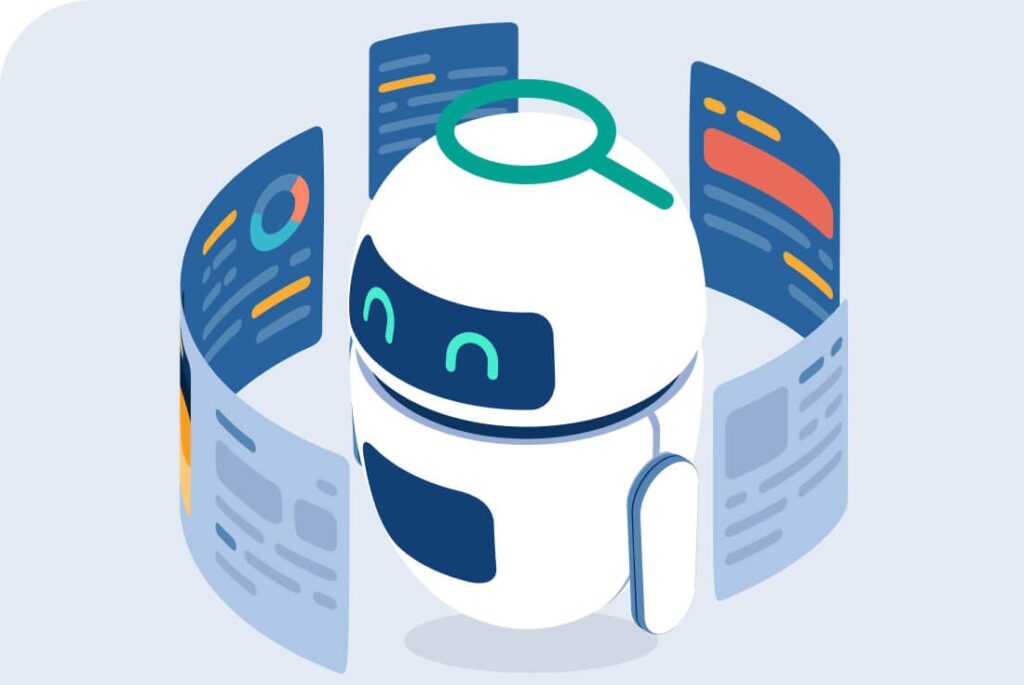
Improving readability and scannability is essential for both human readers and AI-driven search systems. Simplifying language helps ensure your message is understood. Short sentences, clear vocabulary, and logical flow make content easier to digest.
Even when technical terms are necessary, providing brief explanations or context helps both people and AI interpret the information accurately. Search engines tend to favor content written at a high school reading level, as it balances accessibility with authority.
Structured content also enhances AI scannability. Well-organized sections, concise paragraphs, and clear headings allow AI to quickly identify key points.
Using bullet points, numbered lists, or short summaries strategically can make your content easier for AI to extract and present in answers. For example, summarizing the benefits of a Life Science SaaS platform in three clear points allows AI tools to lift that information for overviews or knowledge panels.
Linking to related resources and internal pages also reinforces context for AI while guiding readers deeper into your content ecosystem.
By combining clarity, structure, and strategic linking, your content becomes not only easier to read for humans but also more likely to be surfaced in AI-generated search results. This approach is a cornerstone of effective Life Science AI Search strategy.
FAQs are one of the most powerful tools for capturing high-intent search queries and improving content visibility in AI-driven search. When structured correctly, FAQs allow your pages to directly answer the questions your audience is actively asking. This makes them more likely to appear in AI summaries, knowledge panels, and featured snippets, which increasingly dominate search results in life sciences and biotech.
Research indicates that AI Overviews are most often generated in response to informational queries. A Semrush studyfound that 88.1% of searches producing an AI Overview were informational in nature. For these types of queries, a well-organized FAQ page is particularly likely to be used as a source by AI systems.
For Life Science AI Search, the goal is to create questions and answers that are clear, concise, and keyword-rich. Well-crafted answers provide immediate value while linking to deeper content, such as articles, white papers, or insight briefs, to guide readers toward further engagement.
To maximize impact:
Incorporating three to five FAQs per page ensures a balance between coverage and readability. This strategy strengthens your overall Life Science AI Search presence while supporting deeper engagement with your resources.
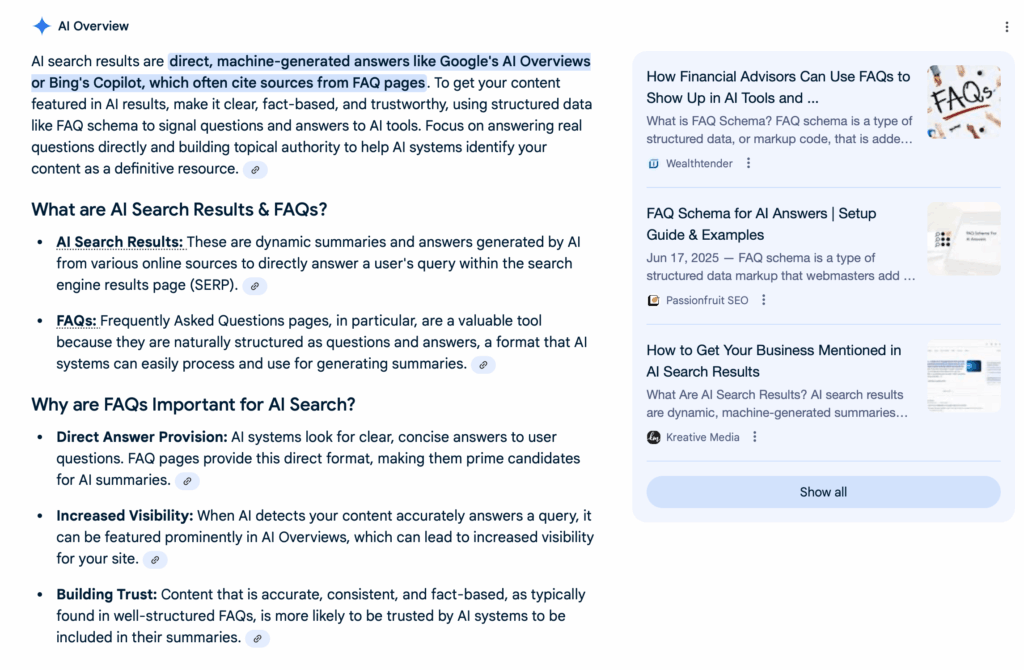
Optimizing for AI-driven search in 2026 means rethinking SEO from the ground up. SXO keeps content usable, AEO makes it answer-ready, and GEO ensures it is visible within AI-generated responses. By combining these strategies with strong titles, mobile-first design, and structured FAQs, your content will stay ahead of search evolution and remain visible to the audiences who matter most.
Ready to turn your digital presence into a growth driver?
Let’s talk about how a smarter SEM strategy can help your life sciences brand stand out, reach the right audiences, and deliver measurable results.

To make sure you get accurate and helpful information, this guide has been edited and fact-checked by the Rebound Editorial Team.