
Most healthcare SaaS and life sciences technology companies get their first customers the same way: through the founder.
The founder knows the market, understands the product better than anyone, and has the relationships and credibility to open doors. They can navigate technical conversations, respond to objections in real time, and adjust the story depending on who is sitting across the table.
That model works. It is often exactly what gets a company through its earliest stage of growth.
As the business grows, the founder gets pulled into more sales conversations. Deals depend on their involvement to move forward. Pipeline continues to come through relationships and referrals. Marketing may be active, but it is not yet generating enough predictable demand on its own.
The company has gained traction, but the commercial engine still depends heavily on the person who built it.
That is the point where founder-led growth needs to evolve.
The next stage is about turning what the founder already knows into something the rest of the organization can repeat: a clearly defined ideal customer profile, differentiated positioning and messaging, a shared go-to-market strategy, sales enablement, demand generation, and the systems needed to understand what is actually driving pipeline.
The challenge is that building those capabilities creates another decision.
What kind of marketing support does the company need to make the transition?
For some organizations, the gap is strategic leadership. They already have people who can execute, but they need senior direction to align the work around a coherent go-to-market strategy.
For others, the gap is broader. They need leadership alongside specialists who can execute across content, demand generation, digital, product marketing, sales enablement, and marketing operations.
And for companies with a proven GTM model, stable marketing needs, and an established execution organization, the next step may be permanent internal leadership.
There is no single marketing structure that fits every stage of growth. The structure should evolve with the business.
This guide will help you identify where founder-led growth is creating constraints, what needs to be built to create a more repeatable commercial engine, and where fractional marketing leadership and execution can fit alongside the capabilities you already have.
Rebound’s Marketing Acceleration™ model is one approach to this transition, combining fractional CMO leadership with specialized marketing execution that can fit around a company’s existing resources and evolve as its needs change.
The result is a commercial engine built around the strengths you already have, with the structure and support to generate growth beyond the founder’s direct involvement.
Founder-led sales is a powerful early growth model for healthcare SaaS and life sciences technology companies.
Founders bring product expertise, industry relationships, market knowledge, and personal credibility into every conversation. They understand the nuances behind the product, know the problems it was built to solve, and can adapt the conversation as they learn more about the buyer.
That combination helps companies win early customers and establish traction.
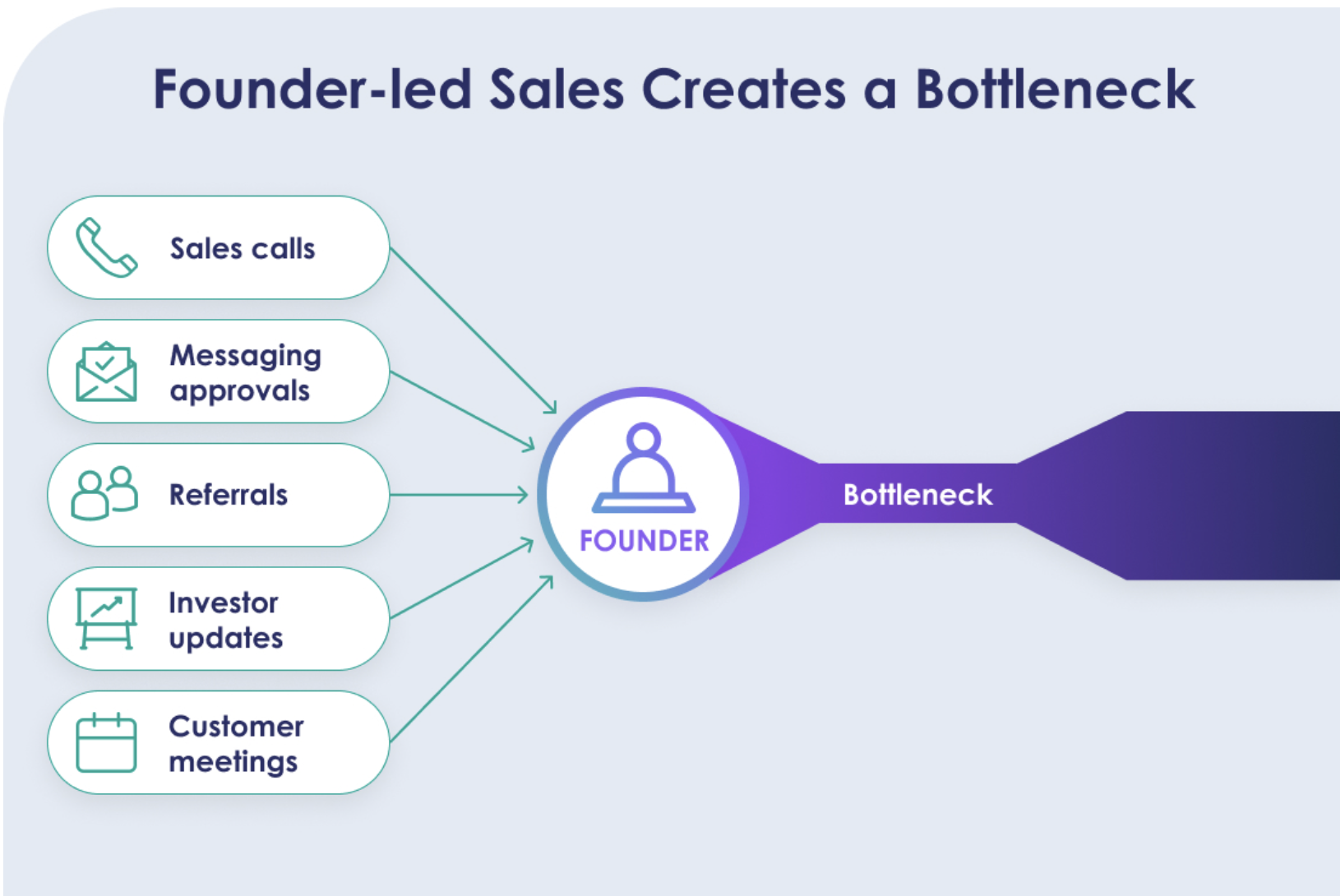
As the business grows, however, the demands on the founder grow with it. More opportunities require their involvement and prospects look to them for technical or strategic validation. This often means that deals may slow when they are unavailable.
Eventually, the founder becomes a constraint on how much of the market the company can reach.
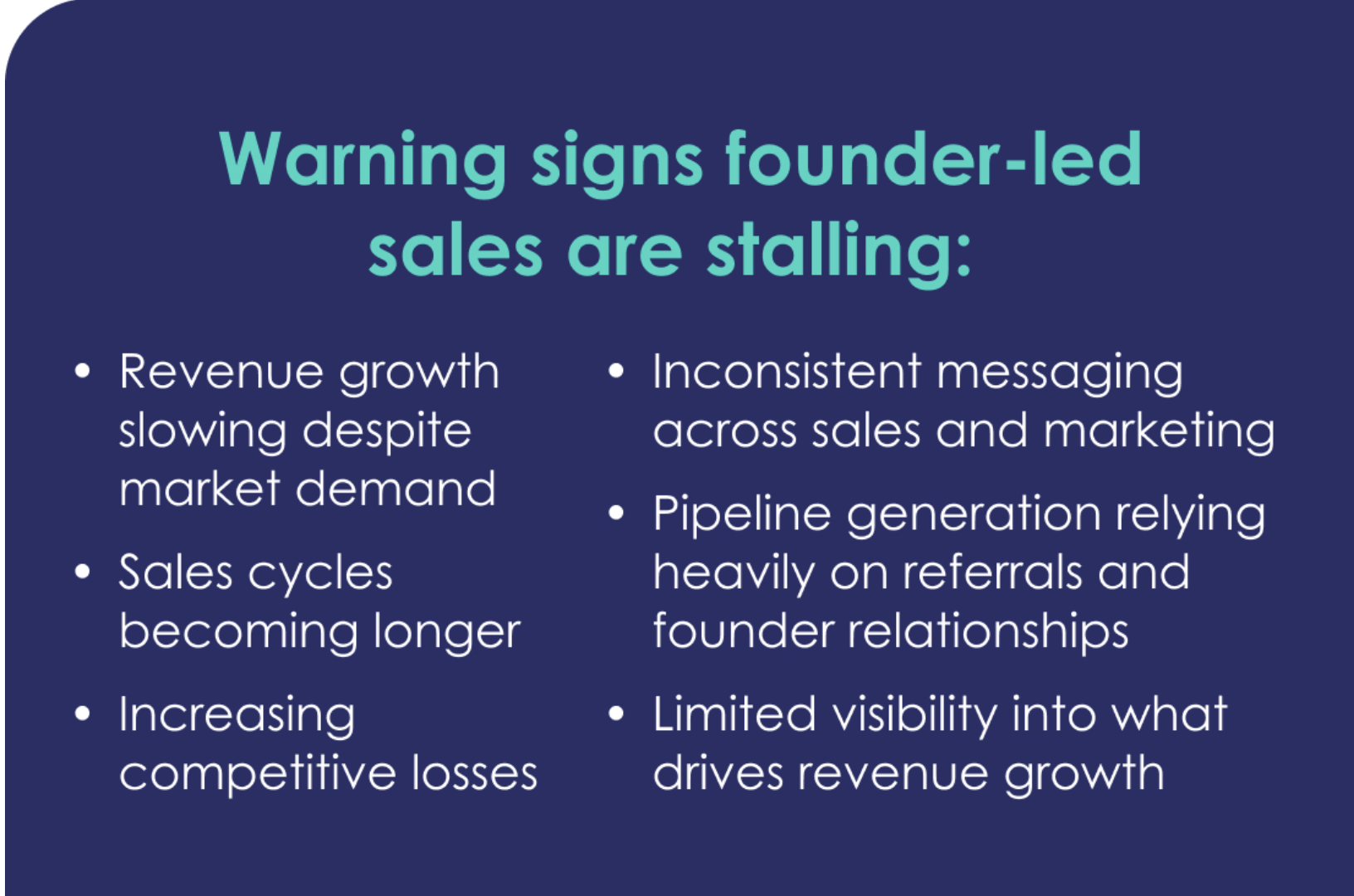
The transition can be easy to miss because the company may still be winning business. The warning signs tend to appear in day-to-day commercial activity first:
These signals point to a commercial model that still relies on individual knowledge and relationships.
For healthcare SaaS companies, that dependency becomes increasingly difficult to manage as the buying process grows more complex. A single deal may involve clinical leaders, IT, procurement, compliance, finance, and an executive sponsor. Each stakeholder evaluates the solution through a different lens and needs messaging that reflects their priorities.
The founder may have learned how to navigate those dynamics through years of industry experience and customer conversations. Scaling requires capturing that knowledge and making it usable across the organization.
A scalable go-to-market system gives the broader team access to the insights and tools that have been driving early sales.
That foundation includes a clearly defined ICP, documented customer and buying committee insights, differentiated positioning, consistent messaging, sales enablement, and a shared understanding of how the company wins.
It also creates greater alignment across marketing, sales, and product. Customer insights can inform product decisions. Marketing can develop programs around the way buyers actually evaluate solutions. Sales teams can work from a common narrative instead of rebuilding the pitch for every opportunity.
The transition becomes visible when other members of the commercial team can carry successful conversations forward with confidence and consistency.
Founder expertise remains one of the company’s most valuable commercial assets. Documenting and operationalizing that expertise allows it to influence far more opportunities than the founder could personally reach.
That is the foundation for a GTM engine capable of growing beyond founder-led sales.
Relationships are a powerful growth channel in healthcare and life sciences. Early customers often come through referrals, industry connections, and the founder’s reputation in the market.
As growth targets increase, the company needs a broader way to reach buyers. Pipeline needs to extend beyond the people already connected to the founder and create visibility with decision-makers who may have never heard of the company.
This is where marketing becomes a more significant part of the commercial model.
Many companies already have the expertise required to earn buyer attention. The challenge is getting that expertise in front of the right audience consistently.
Rebound saw this firsthand with a global healthcare and pharma commercial consultancy. The company had more than 20 years in market, 400+ practitioners, and experience across more than 100 pharma and biotech brand launches. Its reputation was strong, but much of that reputation existed within established relationships.
Outside that network, the firm had limited digital visibility with the senior commercial leaders it wanted to reach.
Rebound developed an integrated paid and organic LinkedIn program designed to expand that visibility.
Organic content served as a credibility layer through thought leadership, conference insights, and executive voice. Paid media extended the strongest content beyond the company’s existing audience, targeting director-level and above decision-makers across pharma and biotech.
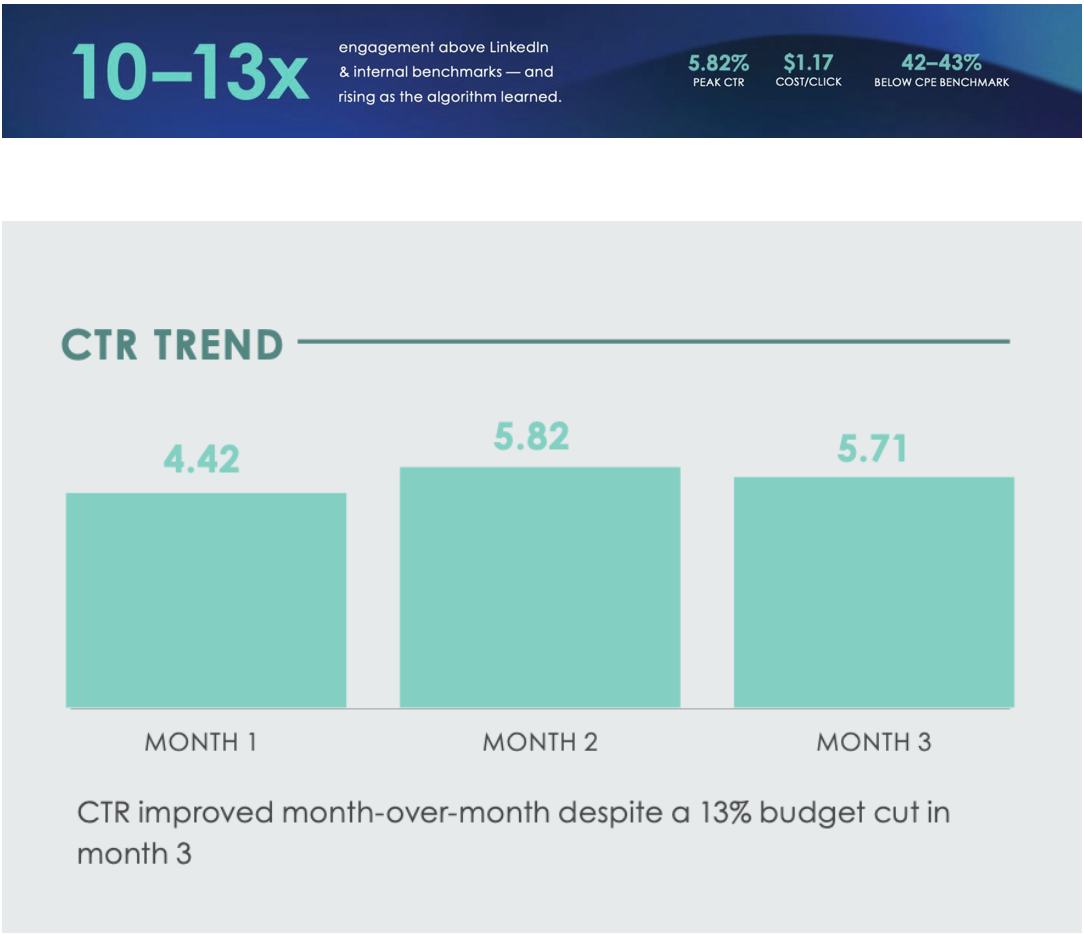
The campaign generated engagement rates of 4.42% at launch, 5.82% in month two, and 5.71% in month three, even with a 13% budget reduction. Engagement reached 10–13x the cited LinkedIn and internal benchmarks, while cost per engagement was 42–43% below benchmark.
For niche healthcare and life sciences tech audiences, reaching the right buyers consistently creates an important foundation for demand generation.
The case study used an awareness-first approach. Instead of beginning with an immediate conversion ask, the campaign focused on strategic questions that reflected the audience’s real challenges and used paid and organic activity as a coordinated system.
That approach allowed the company’s existing expertise to reach decision-makers beyond its established relationships.
For companies transitioning from founder-led sales, this represents an important stage of commercial growth. Content, digital presence, thought leadership, and demand programs expand the company’s reach while building familiarity and credibility with prospective buyers.
Over time, pipeline becomes less dependent on direct founder relationships and more connected to a marketing system the broader commercial team can support, measure, and scale.
The company’s expertise can begin opening doors at a scale that personal relationships alone cannot reach.
Generating demand beyond the founder’s network is an important step. Sustaining that growth requires the rest of the commercial organization to operate as a coordinated system.
Marketing, sales, product, and leadership need a shared understanding of who the company serves, how it wins, and how success is measured. As healthcare SaaS and life science tech companies grow, that alignment becomes increasingly important because more people, channels, and activities are contributing to the customer journey.
Marketing and sales are strongest when they share accountability for pipeline creation and revenue outcomes.
That means working from the same priorities and metrics, with clear roles and visibility into what is moving opportunities forward. Marketing programs should reflect the way buyers evaluate the solution, while sales teams need the content and support to continue those conversations throughout the buying process.
Marketing operations provide another layer of visibility. CRM systems, reporting dashboards, attribution models, and KPI scorecards help leadership understand pipeline health, evaluate which activities are contributing to growth, and make better decisions about where to invest.
As those systems mature, commercial decisions can be based on shared data rather than individual updates from the field.
Alignment also connects the customer back to the broader business.
Insights from sales conversations can inform product planning. Marketing can respond to the questions and priorities buyers raise during their evaluation. Sales enablement can evolve around the objections and conversations that consistently influence deals.
This creates a feedback loop across the commercial organization, with teams working from the same understanding of the customer and the market.
For companies moving beyond founder-led sales, this is a significant milestone. The commercial model begins to operate through shared priorities, processes, and measurement, giving the organization greater visibility into what is working and where the next growth opportunity sits.
The result is a GTM system that continues to evolve as the company grows.
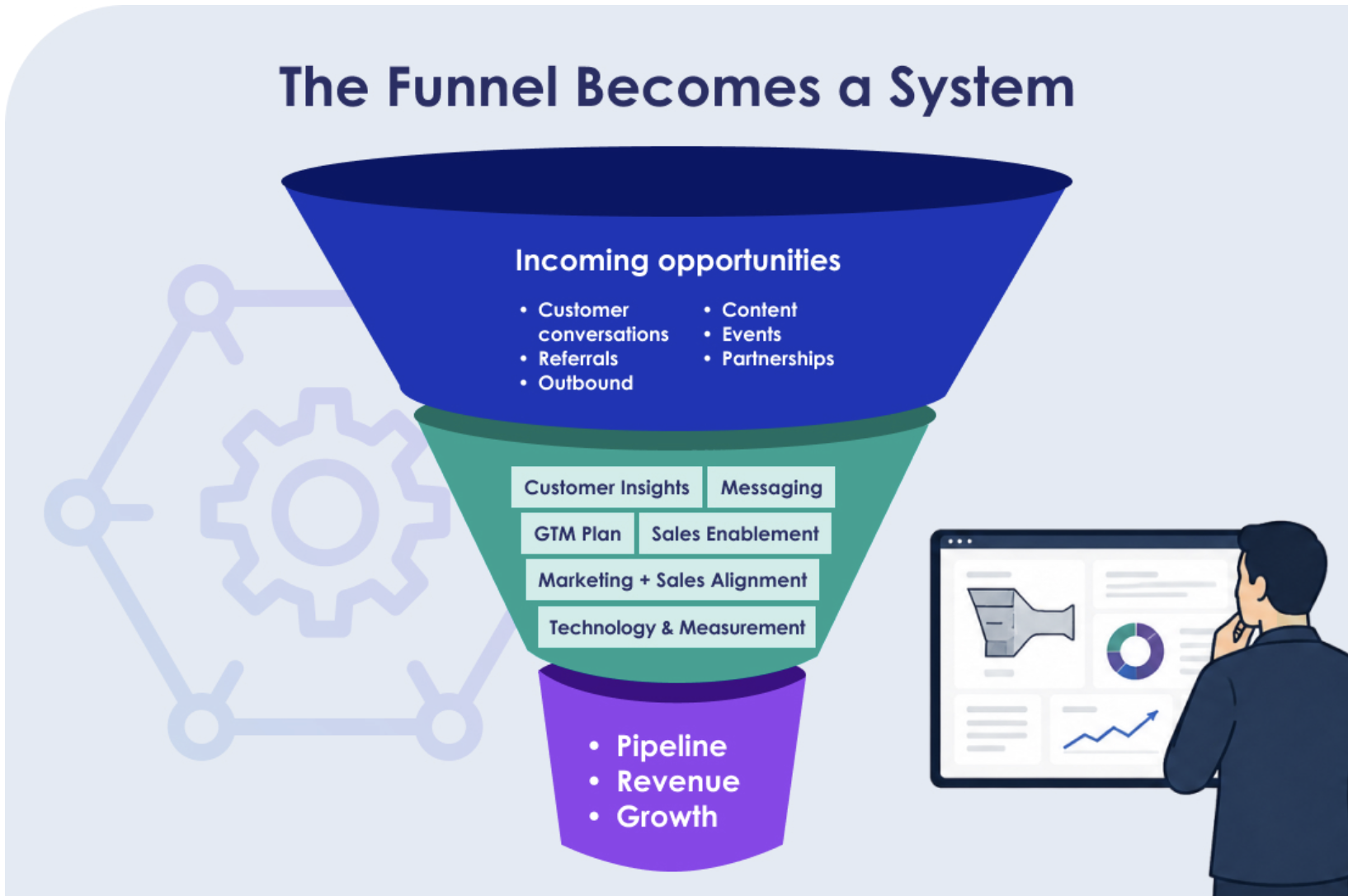
Once a healthcare SaaS or life science tech company reaches this stage, the need for more marketing support usually becomes clear.
The harder decision is determining what that support should look like.
Growing companies may need several capabilities at the same time: positioning, content, demand generation, digital marketing, product marketing, sales enablement, marketing operations, and analytics. One marketing leader may set direction across these areas, while specialists are still needed to execute the work.
That makes the company’s existing capabilities an important starting point for deciding what comes next.
Start with the capabilities your next stage requires, then build the marketing structure around them.
Marketing requirements change quickly as companies grow.
One quarter, the priority may be sharpening positioning and establishing go-to-market priorities. The next may require thought leadership, demand generation, sales enablement, or stronger marketing operations.
A fractional model gives companies access to senior leadership and specialized expertise while allowing the mix of support to evolve with those priorities.
This flexibility is especially valuable during transitions between stages of growth. The company can add capabilities where they are needed, work alongside the resources already in place, and adjust the level of support as the commercial model matures.
For healthcare SaaS and life science tech companies, sector experience can also shorten the learning curve. Buyers are sophisticated, sales cycles are long, and companies may be selling into complex organizations across pharma, biotech, providers, or payers. A fractional team with relevant market experience can begin with an understanding of those buyer dynamics.
The next decision is how much of the marketing function needs fractional support.
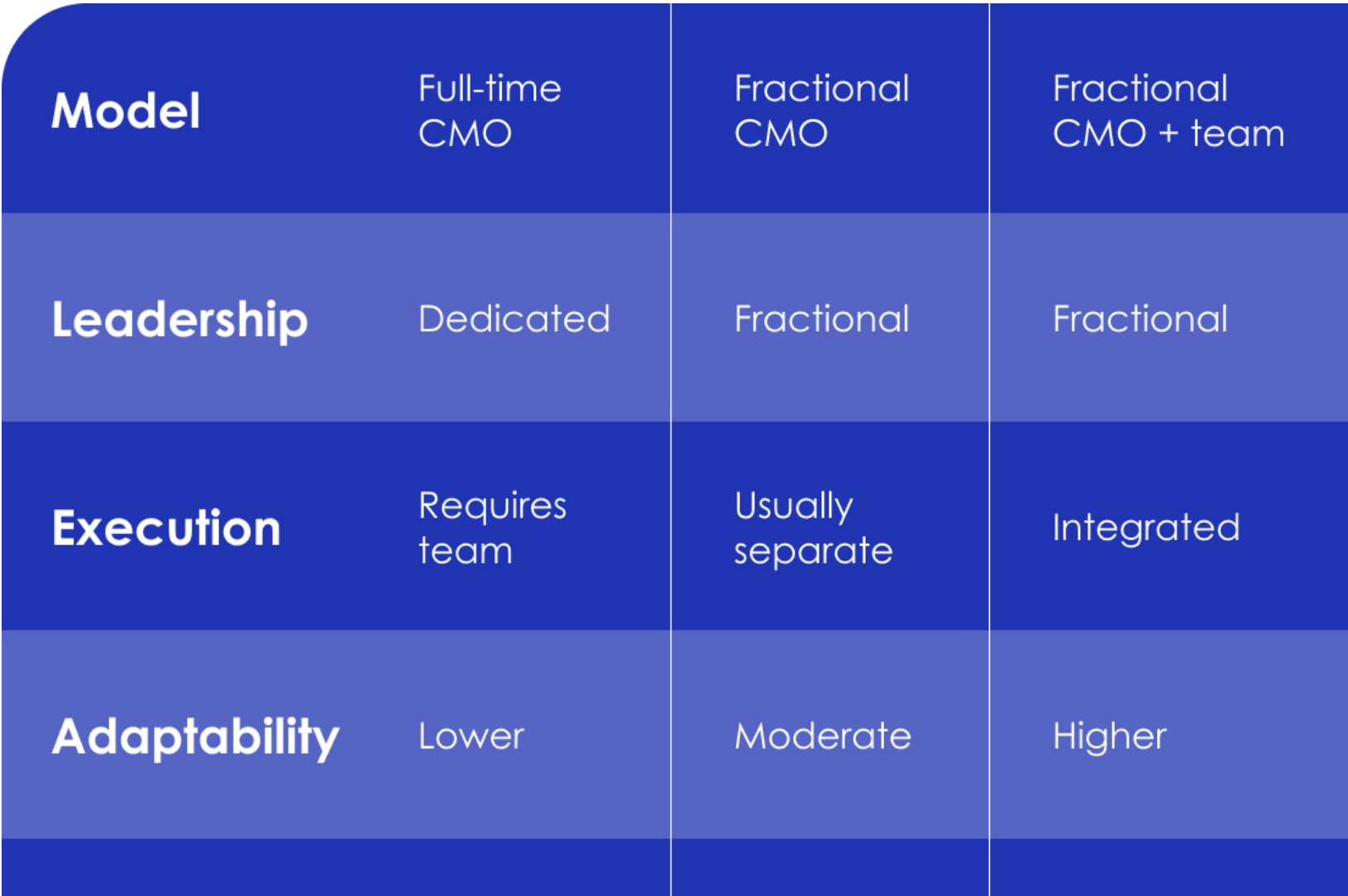
For companies with strong execution resources, the primary gap may be strategic leadership.
A fractional CMO can provide direction across ICP definition, positioning, go-to-market strategy, channel prioritization, and marketing-sales alignment. They can establish priorities, guide existing resources, and help connect marketing activity to the broader commercial strategy.
This model works best when the company already has people who can turn that direction into market activity across the channels and programs the strategy requires.
Other companies need support across several capabilities at once.
A fractional CMO may establish the strategy, while an integrated team provides the specialists needed to execute across content, digital, demand generation, product marketing, sales enablement, and marketing operations.
The team can fit around existing internal capabilities. If the company already has strength in certain areas, fractional resources can focus elsewhere. As priorities shift, the mix of specialists can shift with them.
This also keeps strategy and execution connected. The team responsible for establishing the direction remains involved in bringing that strategy to market, reducing the handoff between planning and delivery.
The decision can begin with two questions:
Do you have the execution resources you need, but lack senior marketing direction?
A fractional CMO can provide the strategic leadership to guide and align the existing team.
Do you need senior direction and additional execution capacity?
A fractional CMO paired with an integrated team can provide both, adding specialized capabilities around the people and resources already in place.
The value of the fractional model comes from that ability to fit the company at its current stage. Leadership, expertise, and execution capacity can be added where they create the most value and evolve as the company’s needs change.
Moving beyond founder-led sales is a natural stage of growth for healthcare SaaS and life science tech companies.
The founder’s relationships, market knowledge, and credibility created the early momentum. As the company grows, that foundation needs additional structure around it: broader market visibility, repeatable demand generation, stronger commercial alignment, and the marketing capacity to support growth across the organization.
The right support will look different for every company. Some teams need experienced marketing leadership to guide an existing group. Others need specialists who can fill specific execution gaps. Companies earlier in their commercial development may need an integrated team that can provide both leadership and execution, flexing as priorities change.
Rebound’s Marketing Acceleration™ model is built for that flexibility. Rebound works alongside healthcare SaaS and life science tech companies to add fractional CMO leadership and specialized execution across positioning, content, demand generation, digital, product marketing, sales enablement, marketing operations, and analytics.
The team and capabilities can adapt around the resources already in place and evolve as the company’s needs change.
Connect with Rebound for a 30-minute GTM diagnostic. We’ll look at your current commercial model, identify the highest-leverage gaps, and help determine the marketing support needed for your next stage of growth.
What is founder-led sales?
Founder-led sales is a growth model in which the founder plays a central role in generating and closing business through personal relationships, market knowledge, product expertise, and direct involvement in sales conversations.
When should a healthcare SaaS company move beyond founder-led sales?
The transition becomes important when deals depend on founder involvement, pipeline relies heavily on personal relationships, or the broader team struggles to replicate successful sales conversations. These are signs that the company needs a more repeatable GTM system.
When should you bring in a fractional CMO?
A fractional CMO can be valuable when a company needs senior marketing direction across positioning, GTM strategy, channel priorities, and marketing-sales alignment but does not need that expertise as a permanent internal role.
What does a fractional CMO do for healthcare SaaS companies?
A fractional CMO provides senior marketing leadership across areas such as ICP definition, positioning, go-to-market strategy, channel prioritization, and marketing-sales alignment. They can work alongside an existing team to establish priorities and guide execution.
What is the difference between a fractional CMO and a fractional marketing team?
A fractional CMO provides senior strategic leadership. A fractional marketing team adds execution specialists across areas such as content, demand generation, digital, product marketing, sales enablement, and marketing operations. An integrated model combines both.
When do you need an integrated fractional marketing team?
An integrated fractional team fits companies that need senior marketing direction and additional execution capacity. It can add specialized capabilities around existing employees and adjust the mix of resources as priorities change.

To make sure you get accurate and helpful information, this guide has been edited and fact-checked by the Rebound Editorial Team.